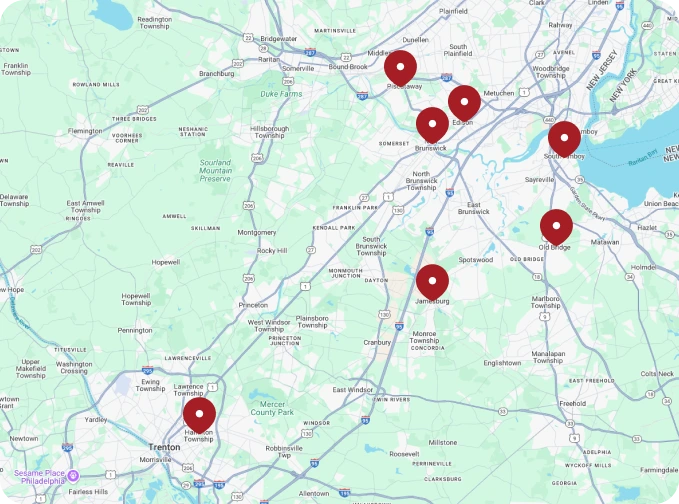


When your heating or cooling system fails, you need practical, reliable HVAC repair in Hamilton, NJ that restores comfort quickly and protects your home. Central New Jersey’s hot, humid summers and cold winters put extra stress on residential and commercial HVAC systems; untreated problems can lead to higher energy bills, poor indoor air quality, and complete system failure. This page explains the most common HVAC failures in Hamilton homes, how technicians diagnose and troubleshoot on-site, what parts are commonly replaced, realistic repair timelines, emergency response expectations, and prevention tips to reduce future breakdowns.
.jpg)
HVAC Repair In Hamilton, NJ
Hamilton-area homes experience a predictable set of failures driven by climate, system age, and maintenance gaps. The most frequent issues include:
- No cooling or no heating — often caused by thermostat faults, tripped breakers, failed compressors, or ignition problems in furnaces.
- Weak airflow or uneven temperatures — usually due to clogged filters, failing blower motors, duct leaks, or obstructed vents.
- Refrigerant leaks and low cooling capacity — leads to long run times, higher energy use, and potential compressor damage.
- Short cycling — system turns on and off repeatedly; commonly caused by improper refrigerant charge, oversized systems, or control failures.
- Strange noises or odors — screeching, rattling, or burning smells can indicate failing bearings, loose components, or electrical issues.
- Frozen evaporator coils or condensation problems — high summer humidity in Hamilton can contribute to coil icing and clogged condensate drains.
- Pilot/ignition and combustion issues in gas furnaces — safety-critical problems that require careful inspection.
HVAC diagnostic process and on-site troubleshooting
A structured diagnostic approach finds the root cause quickly and avoids needless part swaps. Typical diagnostic steps include:
- Initial visual and safety check — verify power, thermostat settings, filter condition, and visible damage.
- Electrical and control testing — measure voltage at components, check capacitors, relays, and control boards.
- Airflow and duct inspection — assess supply and return airflow, inspect duct connections and filter slot for obstructions.
- Refrigerant system evaluation — use pressure gauges and temperature readings to detect leaks and measure system charge.
- Combustion analysis for gas systems — inspect flame, venting, and heat exchanger integrity where applicable.
- System performance metrics — check superheat/subcooling, temperature differentials, and runtime behavior.
On-site troubleshooting often resolves issues without parts replacement. Common immediate fixes:
- Resetting breakers or replacing a blown fuse
- Clearing/repairing clogged condensate drains
- Replacing worn or dirty air filters to restore airflow
- Tightening electrical connections and securing loose panels
- Adjusting thermostat programming or replacing batteries
- Performing targeted cleaning of coils and condensate pans
Parts replacement, repair types, and estimated timelines
When parts need replacement, technicians follow best-practice repair steps to ensure long-term reliability. Common parts replaced in Hamilton repairs:
- Capacitors and contactors — frequent causes of outdoor unit failures
- Compressor replacement — required when the compressor fails or locks up
- Blower motors and fan assemblies — restore proper airflow
- Control boards and thermostats — modern systems rely on electronics that can fail
- Expansion valves, TXV, and refrigerant lines — for refrigerant flow control and leak repair
- Heat exchangers and burners — major furnace components that affect safety and efficiency
- Ductwork repairs — sealing or replacing damaged sections to recover performance
Typical repair timelines (varies by system and parts availability):
- Diagnostics: most systems are diagnosed within one service visit, usually under an hour.
- Minor repairs and part swaps (filters, capacitors, contactors, capacitors): often completed the same day.
- Moderate repairs (motors, control boards, refrigerant leak repair): may take several hours and sometimes require same-day parts delivery.
- Major component replacements (compressor, heat exchanger, full system retrofits): can take a full day or longer and occasionally require ordering specific OEM parts, which affects scheduling.
Factors that influence repair duration include system make and model, part availability, accessibility of equipment, and whether additional safety testing is required (especially for gas appliances).
Emergency HVAC repair expectations in Hamilton, NJ
Hamilton households can encounter emergencies such as total loss of cooling during a heatwave, no heat in freezing conditions, or suspected carbon monoxide leaks from combustion appliances. Emergency repair expectations typically include:
- Rapid response and triage — safety checks first: gas leaks, CO risk, and electrical hazards.
- Temporary measures — short-term fixes to restore safe operation (e.g., bypassing a failed control to enable heat) while planning a permanent repair.
- Clear communication on next steps — explanation of diagnostic findings, safety risks, and repair options.
- Work prioritization — safety-critical issues are addressed before comfort issues.
In locations with extreme heat or cold, prioritizing emergency response minimizes health risks and prevents secondary damage like frozen pipes or mold from prolonged humidity.
What affects repair cost and decision making
While specific pricing varies, several factors determine repair scope and the best course of action:
- System age and remaining expected life — older systems may be better served by replacement rather than repeated repairs.
- Availability of parts — discontinued models or specialized OEM parts can lengthen wait times.
- Extent of damage — single-component failures cost less than cascading failures that affect multiple components.
- Energy efficiency and long-term operating costs — sometimes investing in a newer high-efficiency component or system lowers future utility expenses.
Technicians evaluate these factors to recommend repairs that balance immediate needs, safety, and long-term value.
Preventative tips to reduce future breakdowns in Hamilton homes
Routine upkeep significantly reduces emergency repairs and extends system life—especially important in Hamilton’s seasonal extremes. Key preventative actions:
- Schedule professional HVAC tune-ups at least twice a year (pre-summer and pre-winter)
- Replace or clean filters regularly (monthly during heavy use)
- Keep outdoor condenser units clear of debris, leaves, and snow
- Maintain proper insulation and seal ductwork to reduce system workload
- Monitor refrigerant pressure and service leaks promptly
- Install and test carbon monoxide detectors if you have combustion appliances
- Follow manufacturer-recommended maintenance for thermostats and controls
Timely maintenance improves comfort, indoor air quality, and energy efficiency while reducing the risk of mid-season failures.
Timely HVAC repair in Hamilton, NJ preserves comfort, safety, and system longevity. Understanding common failures, the diagnostic process, expected timelines, and prevention steps helps homeowners make informed decisions and prioritize repairs that protect both comfort and investment.
Customer Reviews
Discover why we’re a trusted choice for home services.

The HVAC contractor provided exceptional service, fixing my AC unit quickly and professionally. Now my home is cool and comfortable again.
Experiencing the recent heatwave, our family urgently needed AC repair. UniProAir quickly came to the rescue, providing efficient service and restoring our home's cool comfort.
When our office building needed a new HVAC system, we turned to UniProAir. Their knowledgeable team guided us through the process, and now our employees are thrilled with the improved air quality.
I highly recommend UniPro AC for all your HVAC needs. I got an appointment within 2 days for a pre-season heating startup. Austin was our technician and he was extremely informative, thorough, professional and so very courteous. 5 stars +
The technician from UniProAir who came to my home was incredibly knowledgeable and skilled. He quickly identified the issue with my HVAC system and efficiently fixed it, ensuring that everything was in proper working order before leaving. I highly recommend!