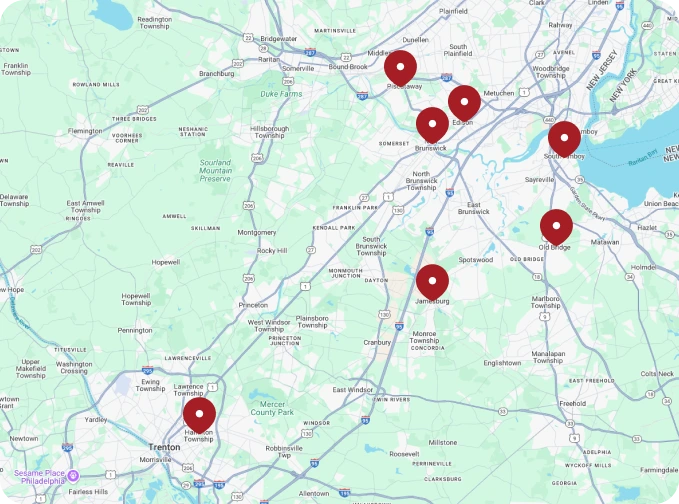


Household air quality testing in Piscataway, NJ helps homeowners identify hidden pollutants, evaluate sources, and verify remediation. The service covers mold, PM2.5/PM10, VOCs/formaldehyde, radon, CO, allergens, biological contaminants, asbestos and lead dust, and indoor CO2 as a ventilation indicator. The process includes a pre-test planning call, on-site inspection, controlled sampling, lab analysis, and plain-language results with prioritized recommendations. Follow-up options range from source containment and ventilation upgrades to filtration, moisture control, radon mitigation, and post-remediation verification to ensure lasting improvements.
.jpg)
Household Air Quality Testing In Piscataway, NJ
Indoor air quality has a direct effect on comfort, safety, and long-term home performance. In Piscataway, NJ, where humid summers, cold winters, older housing stock, and traffic corridors combine to create specific indoor air challenges, household air quality testing helps you identify hidden pollutants, prioritize solutions, and verify that remediation worked. This page explains what we test for, how inspections and samples are collected, how to read results in plain language, and the follow-up services commonly recommended for Piscataway homes.
Why test indoor air in Piscataway, NJ?
Piscataway experiences high summer humidity that encourages mold growth in basements and crawlspaces, while cold winters drive homes to stay sealed—raising concentrations of indoor-generated pollutants. Proximity to commuter routes and local industry can increase infiltration of vehicle exhaust and fine particles. Many homes in the area were built before modern building codes, so legacy issues such as lead dust, asbestos-containing materials, or elevated radon are possible. Testing gives a factual baseline so you can fix the source and measure improvement.
Common household contaminants we test for
- Mold spores and fungi — airborne spore counts and surface identification to spot active growth or historic contamination.
- Particulate matter (PM2.5 / PM10) — fine and coarse particles from outdoor pollution, cooking, smoking, and ventilation issues.
- Volatile organic compounds (VOCs) & formaldehyde — emitted by paints, new furniture, cleaning products, and renovations.
- Radon — a naturally occurring, odorless gas that can accumulate in basements and lower levels; EPA action level is 4.0 pCi/L.
- Carbon monoxide (CO) — measured for combustion appliance safety and ventilation failures.
- Allergens — dust mite, pet dander, and pollen levels to help explain allergy symptoms.
- Biological contaminants — bacteria and other microbial indicators when water damage or illness is reported.
- Asbestos and lead dust — sampled when older building materials are present or renovations are planned.
- Indoor CO2 — used as an indicator of ventilation effectiveness in occupied spaces.
Inspection and sampling process — what to expect
- Pre-test consultation and planning
- We review your concerns, home history (age, recent renovations, known water damage), and occupant symptoms. That determines which tests and how many sampling locations are necessary. Typical homes get samples in the living area, master bedroom, basement, and at the HVAC return.
- On-site visual inspection
- A technician performs a walkthrough to identify visible mold, moisture intrusion, combustion appliances, HVAC conditions, ventilation paths, and potential contaminant sources. Photographs and notes document observations.
- Controlled sampling protocol
- For accurate results, we follow protocols you can expect during testing: windows mostly closed for a period before testing, normal occupancy/activities documented, and avoidance of cleaning or heavy cooking that would skew short-term samples.
- Sampling types commonly used:
- Air spore traps for mold count and species estimation
- Passive or active samplers for VOCs/formaldehyde
- Particle counters for PM2.5/PM10
- Short-term and long-term radon detectors (2–7 day short tests and 90+ day long tests)
- Surface swabs and dust samples for allergens, lead, asbestos, or microbial growth
- Continuous CO and CO2 monitors when combustion safety or ventilation is a concern
- Lab analysis and reporting
- Samples are sent to accredited laboratories. Typical turnaround ranges from a few days for basic particulate and VOC results to several weeks for specialized analyses. Reports include numeric results, lab reference ranges, and annotations about data quality.
Interpreting results — plain-language guidance
- Compare to outdoor levels: For mold and particulates, indoor counts higher than outdoor indicate an indoor source.
- Radon: Any test at or above 4.0 pCi/L is a recognized threshold for mitigation; lower-but-elevated results may still merit follow-up testing or long-term measurement.
- PM2.5 / PM10: Elevated fine particles point to infiltration from traffic/smoking or internal activities like cooking. Repeated high readings suggest ventilation or filtration needs.
- VOCs & formaldehyde: Labs provide total VOC concentration and specific compound breakdown. Elevated levels typically indicate a source (new carpet, paint, or stored chemicals) that should be removed or isolated.
- CO: Any detectable carbon monoxide from appliance combustion is a safety concern. Persistent or spiking CO readings require immediate assessment of combustion equipment and ventilation.
- Allergens and biologicals: High dust-mite or pet-allergen counts explain symptoms but point to cleaning, source control, and humidity management as remedies.
Reports are delivered with plain-language summaries and prioritized recommendations so you know what to address first.
Typical remediation and follow-up services
- Source removal or containment: Replace or seal off materials emitting VOCs, remove mold-contaminated drywall or insulation, and abate asbestos or lead through licensed contractors.
- Ventilation upgrades: Improve balanced ventilation with HRVs/ERVs or upgraded mechanical ventilation to reduce pollutant buildup.
- Filtration and purification: Install higher-efficiency HVAC filters (MERV-rated appropriate for your system), add HEPA air cleaners in problem rooms, and consider UV or bipolar ionization where appropriate.
- Moisture control: Install dehumidifiers, repair leaks, improve grading/drainage, and seal basements to prevent mold recurrence in Piscataway’s humid summers.
- Radon mitigation: Sub-slab depressurization systems are the standard and effective solution when radon is elevated.
- Combustion safety: Service or replace malfunctioning furnaces, water heaters, and venting; install or verify operation of CO alarms.
- Duct cleaning and HVAC service: Clean contaminated ductwork only when sampling shows elevated dust/mold in the system; combine with system inspection and filtration upgrades.
- Post-remediation verification: Retesting after remediation confirms effectiveness. Short-term tests or targeted samples are used to validate improvements.
When to test (recommended triggers)
- Buying or selling a home in Piscataway
- Recent water damage, flooding, or mold growth
- Unexplained respiratory symptoms, odors, or frequent allergy flare-ups
- After renovations, new carpeting, or new furniture
- Periodic checks in older homes for radon, asbestos, or lead concerns
Household air quality testing in Piscataway gives you the data needed to prioritize health, comfort, and home value decisions. Clear, accurate testing plus targeted remediation and follow-up testing create lasting results—especially important in our local climate and housing mix where moisture, traffic-related particles, and older construction can combine to affect indoor air.