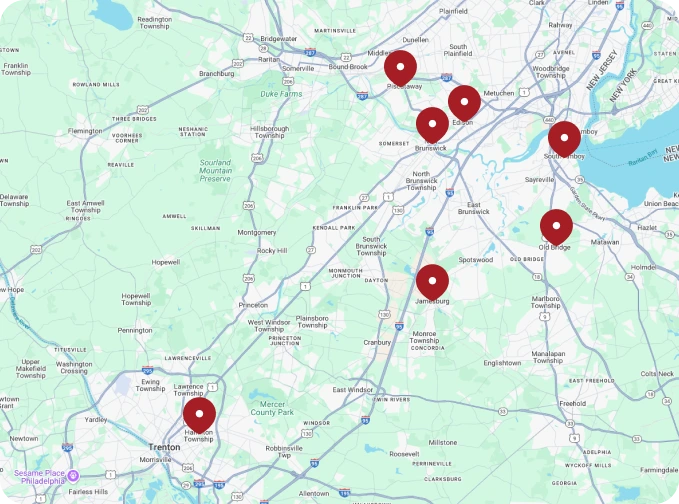


Replacing or installing an air conditioning system is one of the most important investments you can make for year-round comfort and energy savings in Old Bridge, NJ. With hot, humid summers and occasional heat waves, properly sized and professionally installed AC keeps your home comfortable while reducing utility bills and extending equipment life. This page explains the full AC installation process in Old Bridge, what to expect, and how installers ensure systems meet local needs and codes.
.jpg)
AC Installation in Old Bridge, NJ
Old Bridge homes face high cooling loads during July and August because of humidity and prolonged heat. Many houses in the area also have older ductwork, mixed insulation levels, or limited attic space, all of which change how an AC system should be sized and installed. A professional installation that includes accurate load calculations, energy-efficient unit selection, and duct and electrical inspection prevents short-cycling, uneven cooling, and premature equipment failure.
Common AC installation needs we address
- Replacing an old or inefficient central AC system
- Upgrading to a higher efficiency heat pump or split system
- Installing a ductless mini-split for additions or rooms without ductwork
- Replacing only the outdoor condenser while reusing indoor coil when appropriate
- New construction cooling systems sized to specification
- Duct repair, sealing, and balancing for better performance
Site assessment and load calculations
Before recommending a system, technicians perform a detailed site assessment:
- Inspect insulation levels, window types, attic ventilation, and home orientation.
- Measure room sizes and ceiling heights for accurate cooling zone mapping.
- Evaluate existing ductwork condition and static pressure.
- Perform Manual J load calculations to determine the exact cooling capacity required.Accurate load calculations are essential in Old Bridge homes to avoid oversized equipment that causes humidity issues or undersized units that struggle during heat waves.
Energy-efficient unit selection and recommended brands
Choosing the right system affects long-term comfort and utility costs. In Old Bridge, we prioritize high-efficiency models with proper SEER ratings for humid climates.
- Efficiency targets: Look for systems rated at least 16 SEER for central AC; 18+ SEER for maximum savings in new installs or heat pumps.
- Recommended manufacturers commonly used in the area: Amana, Trane, Carrier, Lennox, and Goodman. These brands offer proven reliability, strong parts support, and a range of efficiency options.
- Consider a heat pump if you want combined heating and cooling efficiency; modern cold-climate heat pumps perform well in New Jersey winters.
- Match indoor coil and blower capacity to the selected outdoor unit and your duct system to ensure proper refrigerant charge and airflow.
Permits, inspections, and electrical considerations
AC installations in Old Bridge typically require local permits and may need electrical upgrades:
- Permits and inspections: Local building departments require permits for new condenser installation, refrigerant line runs, and major electrical work. An installer will pull permits and arrange inspections per Old Bridge code.
- Electrical service and disconnects: Most modern AC units require a dedicated circuit and a properly sized disconnect at the outdoor unit. If your home has an older electrical panel, you may need a service upgrade or subpanel.
- Breaker size and wire gauge: Installers verify breaker sizing and wiring to meet manufacturer specifications and local code.
- Condenser pad and placement: Proper clearance, mounting on a level pad, and consideration for drainage and noise are part of code compliance and long-term performance.
Step-by-step installation process
A typical professional installation follows these steps to ensure a reliable, efficient system:
- Pre-install inspection and final load verification, confirming ductwork and electrical readiness.
- Obtain required permits and schedule any necessary inspections.
- Prepare site: remove old equipment, set level concrete or composite condenser pad, and protect landscaping and flooring.
- Install outdoor condenser and indoor coil or air handler. For ductless systems, mount indoor heads and route refrigerant lines.
- Run refrigerant lines, electrical wiring, and condensate drain lines to factory specifications.
- Evacuate and charge refrigerant system to exact manufacturer charge based on line length and system configuration.
- Seal and insulate line sets and duct connections; install disconnects and finalize electrical connections.
- Start-up and commissioning: measure airflow, static pressure, refrigerant superheat/subcooling, and verify thermostatic control.
- Post-install testing and safety checks, including lockout controls, float switch testing, and refrigerant leak inspection.
- Customer walkthrough to explain operation, maintenance, and warranty coverage.
Expected timeline
Typical timelines vary based on complexity:
- Simple condenser swap (same capacity, same location): 1 day.
- Full system replacement with new indoor air handler and duct modifications: 1 to 2 days.
- New installations with permits, panel upgrades, or ductwork replacement: 2 to 5 days.Installations in Old Bridge scheduled during peak season may experience longer lead times. Proper planning and seasonal scheduling reduce delays.
Post-installation testing and customer walkthroughs
After installation, technicians perform a rigorous set of tests:
- Verify correct refrigerant charge and compressor performance.
- Measure airflow and adjust blower speed or dampers if needed.
- Test thermostat calibration and program smart thermostats for efficient operation.
- Check condensate drainage and install safety float switches where required.
- Perform a noise and vibration check of outdoor unit placement.Technicians then walk you through system operation, filter types and replacement intervals, and seasonal maintenance needs so you know how to get optimal performance and longevity.
Warranty and service coverage
A quality installation includes layered protection:
- Manufacturer warranties: Typically cover major components like compressors and parts; coverage lengths vary by brand and model.
- Labor warranty: Professional installers often provide a labor warranty on workmanship for a specified period.
- Extended warranties and maintenance agreements: Consider enrolling in routine maintenance plans to preserve warranty eligibility and keep efficiency high.Always review manufacturer warranty registration requirements, which sometimes require installation documentation or online registration.
Financing and payment options
Many homeowners in Old Bridge choose to finance larger HVAC projects to spread cost over time. Typical options include:
- Flexible installment plans through third-party lenders.
- Interest-bearing or interest-free terms depending on credit approval.
- Financing terms that cover equipment, installation, and optional ductwork upgrades.If budgeting is a concern, ask about plan structures that match expected energy savings to monthly payments.
Long-term benefits and maintenance advice
A professionally installed, correctly sized AC system will:
- Improve comfort and humidity control during Old Bridge summers.
- Lower monthly energy costs when choosing higher SEER equipment.
- Reduce repair frequency and extend equipment life.Maintenance tips to protect your investment:
- Replace filters every 1 to 3 months depending on filter type and household conditions.
- Schedule annual cooling tune-ups to verify refrigerant levels, motor operation, and electrical safety.
- Keep outdoor condenser free of debris and maintain 2 to 3 feet of clearance for airflow.
- Address duct leaks and insulation deficiencies to maximize system efficiency.
Choosing a thorough AC installation approach tailored to Old Bridge conditions — accurate load calculation, correct equipment selection, code-compliant electrical work, and detailed start-up testing — ensures the system meets comfort expectations and performs efficiently for years.