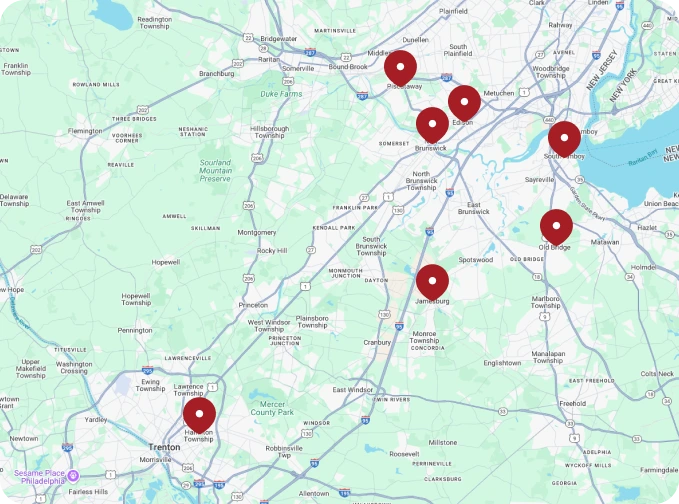


Installing a new air conditioning system is a major investment in comfort, energy savings, and indoor air quality. For homeowners in New Brunswick, NJ, where hot, humid summers and older housing stock create unique cooling demands, a properly planned AC installation ensures reliable performance, lower utility bills, and longer equipment life. This guide explains the full AC installation process in New Brunswick, NJ — from site assessment and load calculations to permits, electrical considerations, expected timeline, warranties, financing options, and the post-installation testing and walkthrough you should expect.
.jpg)
AC Installation in New Brunswick, NJ
New Brunswick summers are typically hot and humid, increasing cooling load and runtime. Many local homes are older or multi-family, which can mean undersized ductwork, limited attic space, or electrical panels near capacity. A correct installation tailored to these local conditions prevents:
- Short cycling and premature component failure
- Indoor humidity problems and reduced comfort
- Higher energy bills from an oversized or undersized system
- Frequent repairs from poor airflow or improper refrigerant charge
Common AC installation types and options
- Central split systems (most common for single-family homes): outdoor condenser + indoor coil/furnace or air handler.
- Heat pumps (efficient for year-round heating and cooling): particularly good in moderate NJ winters when paired with backup heat.
- Ductless mini-splits (for older homes or additions): ideal where ductwork is impractical.
- Packaged rooftop units (commercial or multi-family buildings): consolidate components into one outdoor unit.
Recommended brands commonly selected for energy-efficient installations in this market include Amana, Trane, Carrier, Lennox, and Mitsubishi (for ductless). Look for ENERGY STAR-rated models and higher SEER ratings (Seasonal Energy Efficiency Ratio) to match New Brunswick’s cooling needs.
Step 1 — Site assessment and load calculations
A professional installation always begins with a detailed site assessment:
- Perform a Manual J load calculation to determine the precise cooling capacity your home needs based on square footage, insulation, windows, occupancy, and sun exposure.
- Evaluate existing ductwork (Manual D) for leaks, sizing issues, and airflow restrictions.
- Inspect electrical panel capacity and available breaker spaces.
- Identify placement for the condenser (noise, clearance, and airflow), indoor air handler, and thermostat locations.
This assessment prevents common AC installation problems in New Brunswick, NJ, like oversized units, insufficient airflow, and unmet cooling during peak humidity.
Step 2 — Energy-efficient unit selection
Selecting the right unit balances first-cost, long-term efficiency, and local performance:
- Choose a SEER rating appropriate for New Jersey’s climate; higher SEER saves energy during long cooling seasons.
- Consider variable-speed compressors or inverter-driven units for smoother temperature control and better humidity management.
- For homes with limited outdoor space or historic exteriors, ductless mini-splits or high-efficiency compact systems may be preferred.
- Verify manufacturer warranty terms and parts availability before finalizing a model.
Step 3 — Permits and electrical considerations
In New Brunswick, a building permit and inspection are typically required for new installations or major replacements. Key electrical items to plan for:
- A dedicated circuit and properly sized breaker for the outdoor condenser.
- A disconnect switch mounted per code near the outdoor unit.
- Appropriate wire gauge and conduit for line voltage; verify panel amperage and upgrade if needed.
- Compliance with New Jersey electrical codes and local construction code requirements, including inspections.
Working with a licensed contractor familiar with City of New Brunswick permit processes minimizes delays and ensures code compliance.
Step 4 — Installation procedure (step-by-step)
A professional installation generally follows these steps:
- Remove old equipment and prepare staging area (dispose of refrigerant per EPA rules).
- Install the condenser on a level pad with required clearances and vibration isolation.
- Set and connect the indoor unit or air handler; inspect and repair or modify ductwork if needed.
- Run refrigerant line sets, drain lines, and communication wiring; insulate line sets to prevent condensation.
- Make electrical connections, install the disconnect, and secure all wiring to code.
- Evacuate the refrigerant lines and charge the system to manufacturer specifications.
- Start-up the system, verify operation under different modes, and measure airflow, temperatures, and pressures.
- Seal and insulate penetrations and tidy work areas.
Expected timeline
- Simple like-for-like residential replacements: typically 1 day.
- Full system replacements with ductwork modifications or electrical upgrades: commonly 1–3 days.
- Complex installations (new duct design, panel upgrade, or multi-zone systems): may take multiple days depending on permits and parts.
Warranty and registration
Manufacturer warranties vary by brand and model; common arrangements include:
- Parts and compressor warranties from 5 to 10 years on many high-efficiency units.
- Extended warranties available at purchase for additional coverage.
- Contractor labor warranties for workmanship, typically 1 year or longer depending on the installer.
Register new equipment with the manufacturer promptly to activate full warranty coverage and keep documentation for future proof of ownership.
Financing options overview
Many homeowners use financing to spread the cost of upgrades. Typical options include:
- Low monthly payment plans through specialized HVAC lenders
- Short-term promotional financing or deferred interest plans
- Home improvement loans or lines of credit
Financing availability varies; review terms, interest rates, and repayment schedules to choose what fits your budget.
Post-installation testing and customer walkthrough
A thorough post-installation process should include:
- Performance checks: temperatures, refrigerant pressures, and airflow measurements.
- Leak detection and electrical safety inspections.
- Thermostat setup and programming for efficient operation.
- Walkthrough explaining how the system operates, filter locations, and maintenance recommendations.
- Documentation of system model, serial numbers, warranty info, and recommended service intervals.
Long-term benefits and maintenance
Proper installation paired with regular maintenance delivers:
- Improved comfort and humidity control during New Brunswick’s humid summers
- Lower energy bills through efficient operation
- Longer equipment life and fewer emergency repairs
- Better indoor air quality with appropriate filtration and balanced airflow
Plan seasonal tune-ups — ideally spring for cooling systems — to keep performance optimal and preserve warranty coverage.
ConclusionA quality AC installation in New Brunswick, NJ begins with accurate load calculations, careful equipment selection for local climate, correct permitting and electrical work, and precise installation and start-up testing. Understanding each step helps you make informed decisions and ensures your home stays comfortable, efficient, and reliable year after year.